

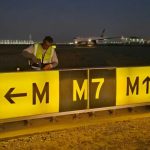
Upgrade Signs to LED Retrofit Kits
April 26, 2026
Using Drones for Navigational Aids (NAVAIDS) Inspection
A Modern Approach to Safer and More Efficient Air Navigation Aids Inspection
Introduction
The aviation industry is increasingly adopting Unmanned Aircraft Systems (UAS), commonly known as drones, to inspect Navigational Aids (NAVAIDS). These systems support aircraft navigation and include the Instrument Landing System (ILS), Doppler VHF Omnidirectional Range (DVOR), Distance Measuring Equipment (DME), and Non-Directional Beacon (NDB).
Traditionally, NAVAIDS inspections required technicians to climb towers, use cranes, or temporarily shut down equipment. Drone technology offers a safer, faster, and more cost-effective alternative while delivering detailed visual information.
Applications of Drone Inspections
Drones can be used to inspect:
· DVOR antennas and support structures.
· ILS Localizer and Glide Slope antenna arrays.
· DME equipment shelters and antennas.
· NDB antenna masts and surrounding infrastructure.
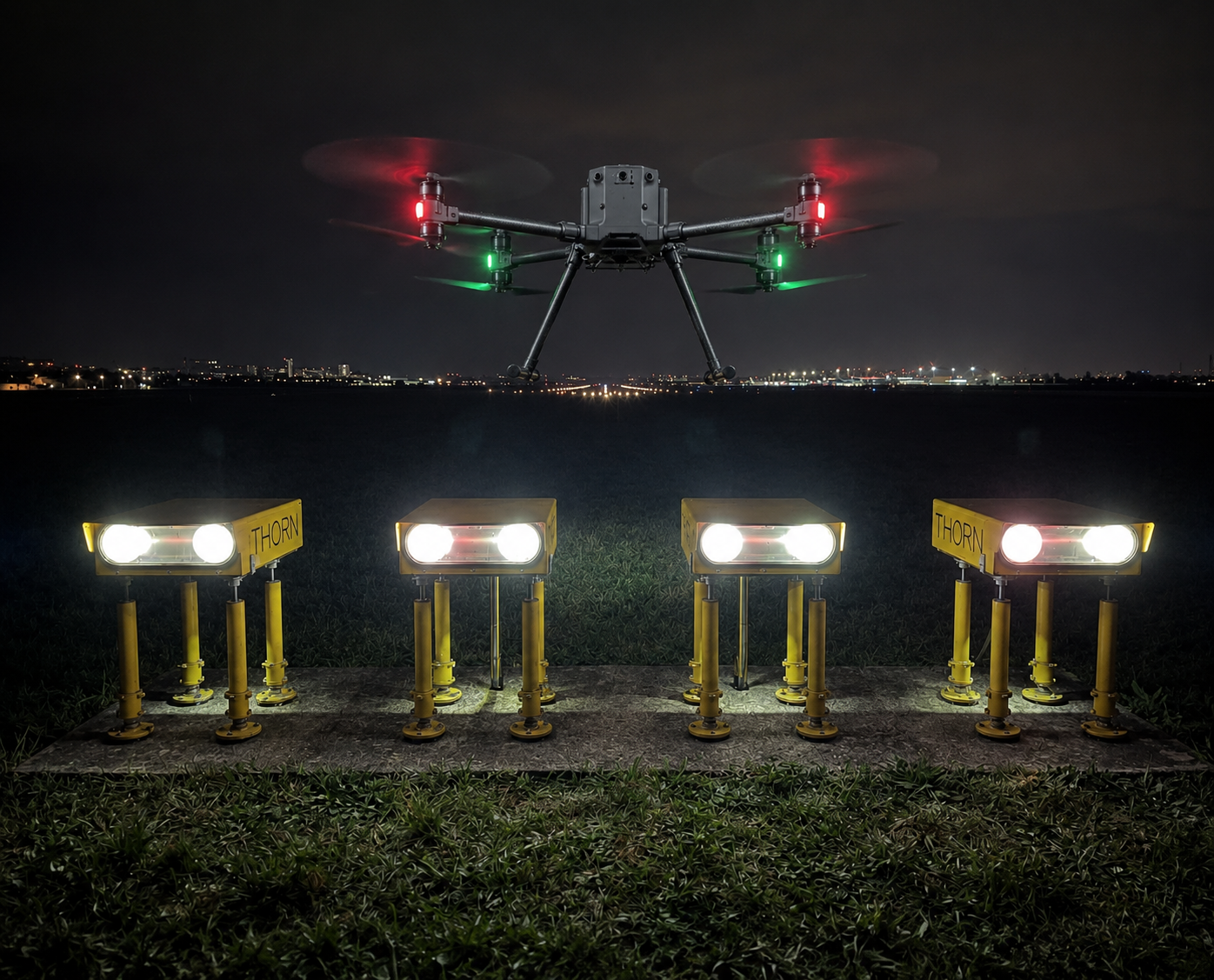
· PAPI Validation of PAPI Approach Angle Against ILS Glide Slope.
· Towers, cables, grounding systems, and security fences.
Other Maintenance Inspection Capabilities
Drones can capture high-resolution images, videos, and thermal data, enabling maintenance teams to detect:
· FOD detection
· Runway & taxiway markings
· ALS approach lights
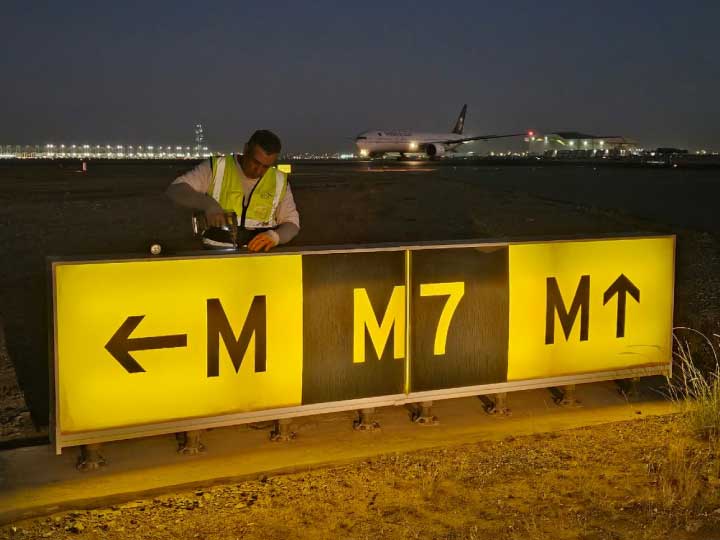
· Runway & taxiway lights
· Pavement cracks & defects
· Damaged antennas or insulators
· Perimeter fence
Benefits
The use of drones provides several important advantages:
⏱️ Operational Efficiency & Minimal Traffic Disruption due to fewer flight delays, Rapid pre-calibration checks, and Flexible inspection scheduling.
💰 Significant Cost Reduction due to lower operational expenses and decreased manual ground personnel to collect initial calibration data.
📐 High Accuracy & Data Quality as using drones maintain highly Precise position control, Unobstructed close-up data, and Digital trending that enable to track degradation trends in visual systems like PAPI.
🛡️ Enhanced Safety & Sustainability with Zero Technicians and flight crews’ risk, and provides Eco-friendly operations as Electric drones emit zero greenhouse gases, significantly shrinking the carbon footprint.
Limitations
Although drones are excellent tools for Navaids inspections, they cannot replace regular Flight checks.
Flight checks remains essential to verify:
· Signal accuracy
· Coverage
· Alignment
· Operational performance of NAVAIDS
Drone inspections should therefore be considered a complementary tool rather than a replacement for regulatory flight checks.
Conclusion
Drone technology is transforming the way airports maintain critical navigation infrastructure. By improving safety, reducing inspection time, and providing detailed visual and thermal data.
Drone inspections cannot completely replace regular crewed flight inspections at this time. Instead, drone-based systems act as a complementary tool that enhances maintenance workflows, reduces costs, and extends the time intervals required between manned flight checks.
As drone capabilities continue to evolve, they are expected to become an integral part of modern airport asset management and NAVAIDS maintenance programs.